
Why high conviction need not mean high risk
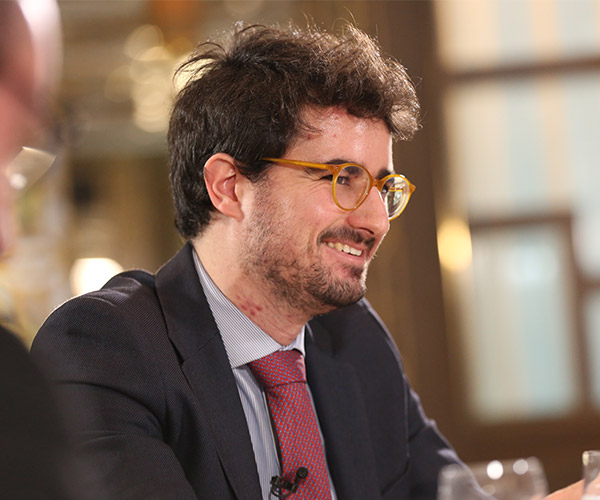
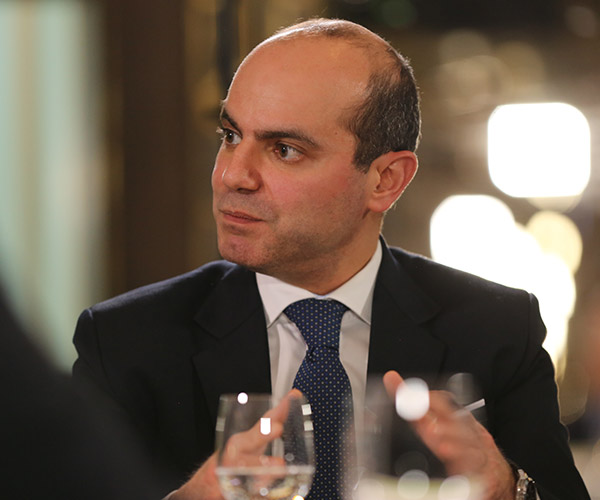
‘As long as we invest in strategies that we can understand, know the risks and can explain them, it becomes much easier for the client to understand as well’
– Ziad Abou Gergi
Fund managers with ‘skin in the game’ have long been lauded for demonstrating conviction in their investment approach. With passive investing encroaching further and further into the realm of active managers, do the benefits of a high conviction strategy still make sense today?
That’s what investors and fund managers set out to decipher when they debated the issue at a recent roundtable in London.
For Filippo Valvona, senior fund selection portfolio manager at Amundi, it depends how you define high conviction. He explained that he thinks of it as holding fewer stocks than the benchmark, but larger positions in them relative to traditional funds.
‘In a high conviction approach, the fund manager is free to focus on the stocks, sectors and geographical area where they have the most familiarity and skill,’ he said. ‘They also avoid certain stocks in the benchmark if they have very low conviction in them.’
The key is having the freedom to focus on your area of expertise – irrespective of the market conditions, he said. In fact, such an approach can be suitable in any environment, as the stocks chosen should be able to generate a very different return to the market.
‘We are looking for the consistency of the style,’ Volvona added. ‘Investing with high conviction means you should be sticking to your style rather than replacing a holding with a momentum stock, as that means you’re following the market.’
PERFORMANCE PUZZLE
One of the misconceptions about high conviction investing is that it is in some ways guaranteed, said Mark Holman, chief executive officer of TwentyFour Asset Management and a portfolio manager for strategic income strategies.
‘You can have high conviction around something and get it wrong,’ he said. ‘I don’t want to confuse conviction with confidence either, because people are very confused today.’
He cited the period from the beginning of October last year to the opening week of 2019, describing it as a really tough phase of the market and questioning whether anyone had the same level of confidence at the end of that period as they did at the start.
Confidence, he suggested, ebbs and flows. ‘Conviction, for me, is a way you express your portfolio,’ he said. ‘It’s the way you construct it, whether that is a benchmark-driven approach where you’re trying to take bets versus the benchmark, or another strategy.’
Holman also highlighted the various risks within fixed income, such as different yield curves, currencies, geographies and parts of the rating spectrum.
‘There are so many things we can do to express conviction through our portfolio construction,’ he said.
He argued that having all-round high conviction generally goes hand-in-hand with a relatively concentrated portfolio – even if managers with highly diversified portfolios are looking to make top-down decisions or asset allocation calls.
‘That may be high conviction, but it misses out on the outperformance that a good manager will generate from the bottom-up,’ he said. ‘If you really want to have your high conviction top-down and bottom-up, I think you need to have a relatively small number of positions.’
FLEXIBLE FUNDS
Alberto García-Cabo Fernández, who is in charge of equity fund selection at Inversis Gestión, argued that high conviction strategies tend to result in highly concentrated portfolios, with managers who are consistent in their styles, processes and philosophies.
‘This doesn’t mean that the manager can’t be flexible,’ he added. ‘Nowadays, a manager that is consistent in their philosophy could also be flexible and turn over their portfolio to the current environment and the current market valuations.’
Investing with conviction may come with higher return expectations, but the approach isn’t for everybody, acknowledged Pierre Bonart, head of multi-management at Edmond De Rothschild Asset Management.
‘We have managers who have very strong track records of outperformance over the long run, but they might underperform significantly against the benchmark for one or two years,’ he explained.
He was also keen to stress that many people assume passive investments are less risky than high conviction active managers. ‘That’s not always the case,’ he said. ‘Take the Swiss index for instance, SMI. Sixty percent of the index is in Swiss stocks such as Roche, Novartis and Nestlé. Active managers are often better diversified than the index itself.’
However, for Bonart, the process remains the same whether or not a high conviction manager is being selected. ‘We want to understand who makes the decisions, how they are taken and if there is key-man risk,’ he said. ‘What is the process behind the decision and how is this process likely to provide us with good performance in the future?’
For Ziad Abou Gergi, part of the multi-management team at Barclays Investment Solutions, any investment is automatically a statement of conviction. ‘Whenever you have money invested in the markets, you already hold a conviction,’ he said.
While it can be difficult to assess some strategies, particularly within the alternatives space, Abou Gergi maintained that the key is doing the research, taking time with the due diligence, understanding the portfolio and not chasing performance.
‘We usually dedicate a lot of time to understanding the sources of alpha within the portfolio,’ he said. ‘There is one very important side of it besides the investment due diligence, which is the operational due diligence.’
In fact, within Barclays, the operational due diligence teams are completely separate from the investment due diligence operations. ‘They do a lot of work on the structure around the investment and understanding the governance and compliance process,’ Abou Gergi explained.
The overall goal is ensuring that as much as possible is covered from both sides. ‘As long as we invest in strategies that we can understand, know the risks and can explain them, it becomes much easier for the client to understand as well,’ he said.
FINDING THE EXPERTS
Meanwhile, Peter McLean, who specialises in manager research at Stonehage Fleming, focuses on searching for skill. ‘When we’re looking at strong performance numbers, we aim to separate manager skill, which can be sustained, from luck, which is unlikely to be repeated over time,’ he explained.
This helps to identify managers that stand out. ‘Our research involves analysing decisions that managers are making and looking at the ratio of their winning and losing trades, how they’re recycling capital and how efficiently they are sizing their holdings,’ he said.
To find stand-out stars, Ulrich Voss, who leads the capital markets unit at Tresono Family Office, is drawn to boutique managers with a focused approach to investment and relatively small teams. ‘You have a perfect alignment of interests, because if they perform, they make a good living, and we tend to find those managers have higher conviction too,’ he said. ‘They’re not biased by any institutional mindset where they have to diversify risks away.’
In many cases, the potential pitfalls of high conviction investing are nothing to do with the approach. ‘The risk is not knowing what you’re doing,’ Voss explained. ‘If you have a higher percentage in one stock, but you know the stock or the company very well, it doesn’t necessarily mean risk.’
The Chapters
Navigating the information trail
The information trail remains daunting for asset managers. Company reports and announcements are one option, providing insights into more than 100,000 firms globally. Then there are tens of thousands of funds and ETFs to track, macroeconomic indicators to parse and political risks to monitor.
Recession or dip? How to prepare portfolios with conviction
With the Fed pausing on its rate hike path and recession indicators proving unreliable, trusted data sources are giving mixed messages. Investors and fund managers discuss how a high conviction approach can help portfolios find a way through the noise
Whether you’re convinced that a recession is imminent or you’re more sanguine about the economy, it pays to be be prepared for a downturn, particularly since no one can have perfect foresight. Here are the dos and don’ts of gearing up for a potential recession
Gaining access to the right data has become an important part of fulfilling your fiduciary duty. How can fund managers reach clear conclusions and avoid the pitfalls of the echo chamber?