
Ready, aim, fire! Latam investors talk conviction
When it comes to high conviction investing, it’s different strokes for different folks. You’ve read what European investors have to say on the issue, here we get a local angle on how investors based in the Americas are implementing these strategies in portfolios

Andrés Valenzuela Grauschopf
Head of asset allocation,
BCI Asset Management
WHAT DOES HIGH CONVICTION MEAN TO YOU?
We think about high conviction in relation to how much risk we want to take at the portfolio level. If you have high conviction, then you are allocating in meaningful position sizes and concentrating in fewer funds. That directly correlates to the level of risk that you want to take.
PUTTING IT INTO PRACTICE
Our process is not based on benchmarks, but we use reference indices to measure our risk exposures and how much are we willing to deviate to add value. We are very aware of the risks we are taking in our portfolios.
MAINTAINING YOUR STANCE
The market is moving more and more on political issues and not necessarily paying attention to the fundamentals. Examples of this are the big correction in December 2018 and the rally that we saw at the start of 2019.
However, fundamentals haven’t changed in a meaningful way to explain this change in market performance. The best explanation is a change of sentiment. So, in this environment of volatile markets, you need to tell your clients that they have to wait a little bit longer – probably longer than before – to see that a high conviction approach delivers.
WHY IT MAKES SENSE NOW
In Latin America, politically, you are seeing structural transformations. For example, in Brazil, the newly elected president has a very friendly economic program. If he’s capable of doing 10% or 20% of what’s on his economic program, I think Brazil has a pretty high chance of being a good market in 2019.
The problem is that the congress is really fragmented, with the biggest party representing no more than 5% of the seats. That means the president must negotiate to pass the big reforms, and that’s a risk. However, not every reform is big or needs constitutional changes. There are important changes that can be done with political conviction alone.
BALANCING ACTIVE AND PASSIVE
It’s not a set rule. For example, in the US, we don’t use active managers. We do more with ETFs there, but outside the US, we think there is a greater chance of finding active managers who deliver better returns. It’s not a rule though. We try to balance our portfolios so that we don’t have just funds or ETFs. We have a mix, and that’s not fixed.
TOP OF THE CHECKLIST
If clients invest with a high conviction manager, then they are expecting that manager to add value. Equally, you need to be aware of the risks you are taking. At BCI Asset Management, we have a culture of risk management, and that is a key part of the investment process.
WHAT IS YOUR CONVICTION FOR THE YEAR AHEAD?
We are taking a little bit of risk. What is holding us back from taking more is that there are a lot of things that need to play out. The most important factor is the trade war between the US and China. Unfortunately, we don’t think this will end soon. We think it is going to extend throughout the year. We are going to experience volatility in 2019 – probably not as much as in 2018, but the main message is that volatility is here to stay.
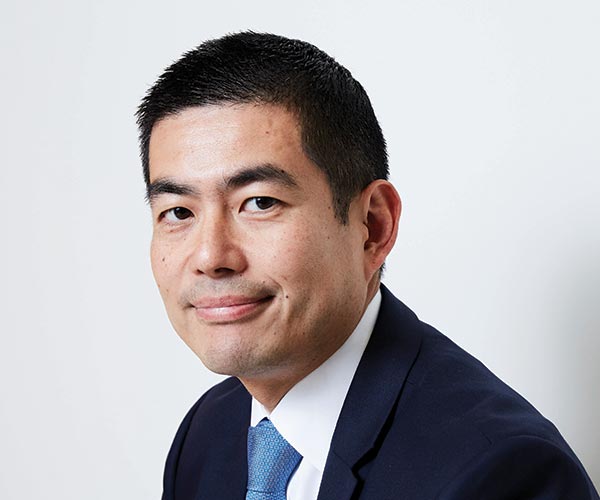
Enio Shinohara
Partner and head of international wealth management portfolios,
BTG Pactual
WHAT DOES HIGH CONVICTION MEAN TO YOU?
High conviction investing today means having staying power in the various different investments we make. I’m talking about both managers and assets, because I think one of the things that has changed over the years in asset allocation is the incentive for allocators to overreact, especially to macro events. That might mean overtrading or having too high a level of turnover in the portfolios.
I think high conviction means being able to stay invested in a certain asset or manager over the long term. That requires a lot of patience.
PUTTING IT INTO PRACTICE
I don’t think that high conviction means having a concentrated portfolio. High conviction and diversification are two very different things. In general, we do have diversified portfolios of managers when we select managers, but each of the individual allocations requires high conviction.
When we think about high conviction investing, we’re basically thinking about the manager’s ability to adapt to new market conditions. In order for us to have a high conviction about a certain manager and have trust in them, it’s not a question of their past record, background, active share or turnover. Instead, what we like to see in a manager is the combination of the will and the skill to adapt to changing markets. This has been especially true over the past 10 years during the quantitative easing period, as there has been far more central bank intervention in the markets.
MAINTAINING YOUR STANCE
On the investment side, we are continually trying to identify managers who have the capacity to adapt to the new macro conditions. Then, on the business side, we want to see whether they have the capacity or ability to adapt to the new and increasing demands of investors.
WHY IT MAKES SENSE NOW
Emerging markets tend to be less efficient. Even in places such as continental Europe, you see much greater market inefficiency than in the US, and the reason for that is not only macro. Obviously, emerging markets are subject to more macro shocks, but I’m not talking about macro per se, but also about market structure.
BALANCING ACTIVE AND PASSIVE
I think passive investment will continue to gain market share, but both active and passive management will coexist.
Actually, active management only exists because there is passive management as well.
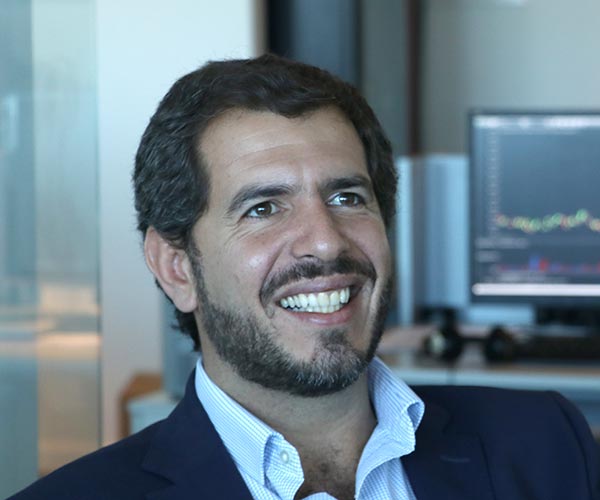
Juan Enrique
Platero Investment analyst,
Banco Santander
WHAT DOES HIGH CONVICTION MEAN TO YOU?
A high conviction manager is someone who follows a select number of companies, buying them at good value and knowing when to sell them. Displaying discipline in this regard is especially important in these kinds of funds.
PUTTING IT INTO PRACTICE
High conviction is very, very important because if you have a lot of stocks in a portfolio, you are almost replicating the benchmark. It doesn’t make a lot of sense to pay an extra 1% or 1.15% in fees to do so.
When it comes to equities, we think high conviction adds a lot of value because you choose the winners and you avoid the losers by taking big decisions and owning the companies, rather than just buying their stocks. This difference in mindset between being an owner of a company and a stock buyer is very important.
MAINTAINING YOUR STANCE
Right now, the economy is significantly different from 20 or 30 years ago. The companies themselves are already like investment funds in how diversified they are. For example, if you are invested in a Japanese stock, but actually, the income from Japan might be less than 10%. In fact, more than 90% might come from Europe, the US and emerging markets.
So while you think you are buying Japan, you are in fact buying diversification. This happens with a lot of stocks in the UK especially and in Europe more generally.
The concept of diversification in a high conviction fund is quite a complicated thing for the average investor to understand, but I think it’s the only way that you can beat the market in a consistent way, if you are a good manager.
WHY IT MAKES SENSE NOW
In this environment of volatility, it is worthwhile investing time trying to get to know the best managers with the best solutions. As such, it’s a good idea to go to the high conviction managers.
Here in South America, the business of investing has changed a lot. Ten years ago, investment funds and fund managers were like risky assets. But thankfully, as a result of experience and a lot of defaults, credit events, corporate actions and a lot of complications along the way, new managers are coming to the region and it’s amazing.
The industry is developing and customers are getting on board with the developments.
BALANCING ACTIVE AND PASSIVE
I think there is room for both of them. It is our job to build optimal portfolios for clients that enable them to hold for the long term. So, in that sense, I like active management, but there is a huge educational exercise that needs to go on to show their performance versus ETFs and not just against the benchmarks.
The Chapters
With index huggers coming under greater scrutiny, investors are proving more willing to pay up for alpha. But should they expect to take on more risk as result? Fund managers and investors debate the merits of a high conviction approach in the current environment
The information trail remains daunting for asset managers. Company reports and announcements are one option, providing insights into more than 100,000 firms globally. Then there are tens of thousands of funds and ETFs to track, macroeconomic indicators to parse and political risks to monitor.
The dos & don’ts of gearing up for a recession
Whether you’re convinced that a recession is imminent or you’re more sanguine about the economy, it pays to be be prepared for a downturn, particularly since no one can have perfect foresight. Here are the dos and don’ts of gearing up for a potential recession
Gaining access to the right data has become an important part of fulfilling your fiduciary duty. How can fund managers reach clear conclusions and avoid the pitfalls of the echo chamber?