
Know your facts! Why a little research goes a long way
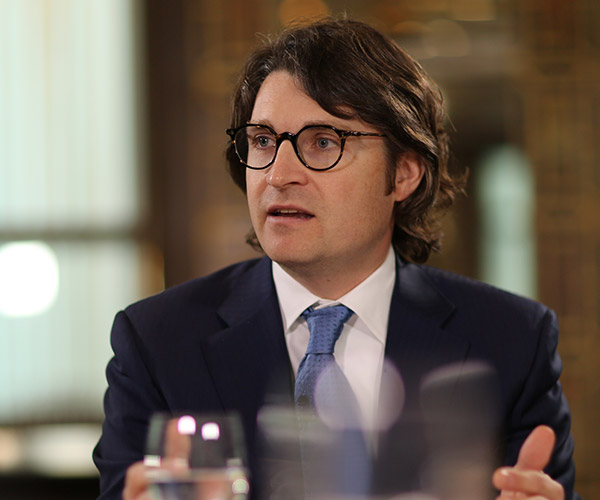
‘Discipline and conviction in the approach is the key thing when avoiding emotional biases’
– Peter McLean
There is no shortage of information out there for fund managers. Long gone are the days of relying on company reports and earnings announcements. Today managers can tap into thousands of data sources to gain insights into how a stock or bond may perform.
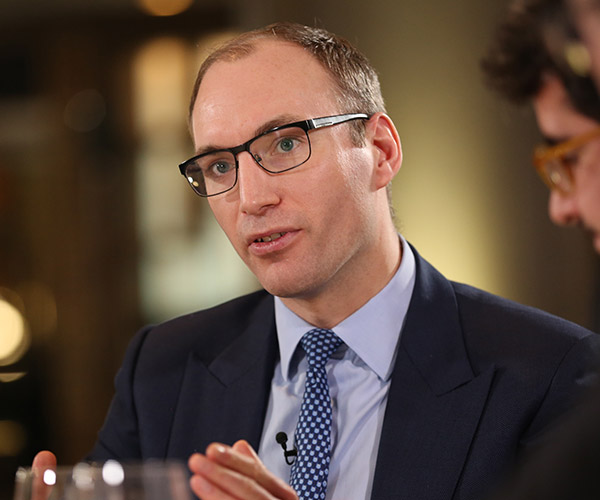
However, such access doesn’t come cheap, and that means fund houses with more financial firepower will have an advantage over their rivals, according to Andrew Harradine, who is responsible for fund selection at EFG Asset Management.
‘All these incremental data sources can be very expensive to purchase, so some firms are probably better placed than others to manage in a much more data-intensive world,’ he said. ‘It’s about having the budget and the infrastructure to process all of that information.’
Harradine has also noticed that artificial intelligence is increasingly being embedded into managers’ investment processes. ‘It’s not necessarily about outsourcing the investment decision to AI algorithms, but using AI in a support function to help with decision-making,’ he explained.
There is a fiduciary responsibility to ensure that you know all the facts – and to have made the effort to get them in a legal way, said Matthew Benkendorf, chief investment officer of Vontobel Asset Management’s Quality Growth Boutique. ‘You have to make sure you have the same data other people have, otherwise you’re at a clear disadvantage,’ he said. ‘You can’t play the game when you have half the information. You have to be up to speed, and you have to have access to the right technology and data.’
CHINESE WHISPERS
Benkendorf also highlighted problems with what he called the ‘echo chamber’ in the marketplace, in that everybody hears things and accepts them as either conventional knowledge or accepted facts.
‘I see more and more clearly conflicting pieces of information publicly,’ he said. ‘Somebody says something and then it’s picked up by someone else and reiterated. Once somebody hears it twice, they assume it’s an accepted fact, and then it takes on a life of its own from there.’
This is something that he believes has become a much bigger problem in recent years, but he also suggested that it illustrates the significant advantage you can enjoy by simply putting in the work to check the information yourself.
Making the effort, he argued, will always yield results. ‘Never underestimate human laziness and the unwillingness or inability to check facts,’ he said. ‘Just doing a little extra work still actually adds a lot of value.’
Conversely, those who are unwilling to go the extra mile will get found out. ‘Maybe for a while, you can get away with not checking your facts, but eventually it’s going to catch up with you and there will be a big difference between those who do and those who don’t check their facts,’ he added.
Benkendorf also cited two other ways to gain that all-important advantage over rival fund groups. ‘You need some sort of bolt hole or style to revert to that you believe in, that works and that you can exercise with conviction repeatedly,’ he said.
It’s also important to prevent emotional bias in your decision-making. This is achieved by being clear from the outset about your intentions, said Pierre Bonart, head of multi-management at Edmond De Rothschild Asset Management.
‘We are clear about the reasons why we select a certain fund, over which time horizon we want to observe it and in which types of market conditions the fund manager is likely to outperform or underperform,’ he explained.
Setting this out in a formalised way will also influence how the fund’s performance is assessed against the backdrop of adverse market events, he argued. ‘We can be clear because we have a long-term plan and we know what we expect of the fund,’ Bonart said. ‘We can see if it’s a change against expectations or if it’s just the market conditions.’
GETTING TO KNOW YOU
As part of the information gathering process, Filippo Valvona, senior fund selection portfolio manager at Amundi, said that he needs to have confidence in how the manager works – and that they’re being honest about their overall investment philosophy.
‘A lot of managers are trying to declare themselves as high conviction managers by providing their high active share, but this ratio doesn’t automatically make them high conviction,’ he said.
Just adding that name to your strategy is not proof, he said. ‘You could have 150 stocks but if they’re all off the benchmark it doesn’t make you a high conviction manager,’ he explained. ‘We define high conviction as being focused on your area of expertise and taking a large stake there.’
Valvona focuses on whether the fund manager has been able to generate a good track record over the longer term. ‘Familiarity with their area and skills in the field are also very important, so they need to be able to demonstrate expertise,’ he said.
This can only be assessed through quantitative screening and analysis, as well as detailed interviews with the managers concerned and other members of their teams. Bonart went one step further, noting that he wants to get an insight into managers’ personalities.
‘High conviction managers can be wrong, so you want them to acknowledge this and not be arrogant when it happens,’ he said. ‘They need to be modest and humble. It’s important for a fund manager to be able to understand their faults.’
The relative importance of data also depends on the asset class you’re focused on, according to Mark Holman, the chief executive officer of TwentyFour Asset Management and a portfolio manager for strategic income strategies.
‘Fixed income is quite an unemotional asset class,’ he said. ‘I’ll put it bluntly – the best thing that can ever happen to you in fixed income is getting your money back.
That makes you think about things in a very dry way.’
LOOKING AT THE BIG PICTURE
For Holman, the macro factors of a potential investment are the priority. ‘Macro is absolutely critical to fixed income, and then it’s about embracing or reducing credit risk,’ he said. ‘That really isn’t a particularly emotional topic.’
This naturally influences how Holman interprets opportunities. For example, he said he would struggle to sit down in front of a borrower and be enticed by the equity story of the business simply because that isn’t his focus.
‘It could be a really wonderful story, but if debt is funding the high-growth equity story, then maybe you shouldn’t be in the debt at all,’ he said. ‘You want to invest in companies where the management is equally focused on all parts of the capital structure.’
According to Peter McLean, who carries out manager research across various asset classes at Stonehage Fleming, one interesting change within fixed income investing is the emergence of strategic go-anywhere bond funds. He argued that interest in this area is likely to grow as we head towards a period of rising interest rates. ‘Bond managers can no longer rely on falling yields and need a broad universe and strong skillset to navigate this transition,’ he said.
However, whether it is in fixed income, equity or multi-asset, McLean believes that the way to combat emotional biases is to ensure that you have a disciplined process and philosophy guiding your actions. ‘A clearly defined process and framework for active decisions ensures the focus remains on the longer-term horizon and isn’t reliant on a single outcome to be successful,’ he said. ‘Discipline and conviction in the approach is the key thing when avoiding emotional biases.’
The Chapters
With index huggers coming under greater scrutiny, investors are proving more willing to pay up for alpha. But should they expect to take on more risk as result? Fund managers and investors debate the merits of a high conviction approach in the current environment
Recession or dip? How to prepare portfolios with conviction
With the Fed pausing on its rate hike path and recession indicators proving unreliable, trusted data sources are giving mixed messages. Investors and fund managers discuss how a high conviction approach can help portfolios find a way through the noise
Whether you’re convinced that a recession is imminent or you’re more sanguine about the economy, it pays to be be prepared for a downturn, particularly since no one can have perfect foresight. Here are the dos and don’ts of gearing up for a potential recession
The information trail remains daunting for asset managers. Company reports and announcements are one option, providing insights into more than 100,000 firms globally. Then there are tens of thousands of funds and ETFs to track, macroeconomic indicators to parse and political risks to monitor.