
Ready, aim, fire! Asia investors talk conviction
When it comes to high conviction investing, it’s different strokes for different folks. You’ve read what European investors have to say on the issue, here we get a local angle on how investors based in Asia are implementing these strategies in portfolios
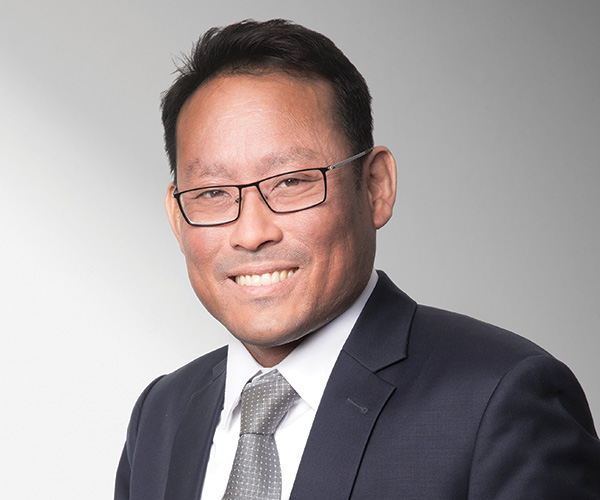
Daryl Liew
Head of Portfolio Management, Reyl Singapore
WHAT DOES HIGH CONVICTION MEAN TO YOU?
High conviction can mean different things to different people. If you stick to your guns, are you high conviction even though you may be wrong in certain market conditions?
If a manager makes up a particular part of a portfolio – for instance the defensive portion – yet they shoot the lights out for that particular year, I would want to understand what caused that deviation from our expectations. This could result in us even switching the manager, as we want each piece of the portfolio to behave in a certain way. If it doesn’t, even if it’s to the upside, it introduces risk.
PUTTING IT INTO PRACTICE
If you look at the bond universe, the unconstrained and absolute return managers will have the broadest remits compared with your emerging market or high yield mangers, who tend to be more specialised.
This speaks to the core satellite approach, where one fund you would hold throughout and the other is more of a trading fund depending on what kind of views you hold.
I would say there is place for both high conviction, concentrated funds and those which are broader and more diversified in the overall portfolio.
MAINTAINING YOUR STANCE
This is where discipline comes into play. I think it’s really important that a fund manager does what he or she is advertised as doing. They shouldn’t veer from the parameters.
Some people try to respond to everything that their investors ask of them, but if something isn’t your strength you shouldn’t try to make it one. Instead, accept that you can’t be all things to all people.
WHY IT MAKES SENSE NOW
Sometimes there are just too many moving parts. For example, in 2016, I was probably in the minority who thought that Trump might win the US presidential elections, so I positioned the portfolios accordingly, holding a little more gold and more yen – all the defensive stuff.
My portfolios were OK for six hours. Then I went to bed and came back the next morning and basically everything had gone. It had just reversed really quickly. So you could get the call right but the consequences wrong, which is why it’s really important that the funds you hold stick to their stated aims.
WHAT IS YOUR CONVICTION FOR THE YEAR AHEAD?
We accept that sometimes you may not have a strong conviction because the market signals are telling you different things, so we do need to see a bit more alignment before we can have some more conviction in some of our calls.
You really have to watch the data coming out. We’re conservatively positioned as we need to see the economic numbers and earnings revisions bottom out before we get more comfortable increasing our risk in the portfolios. Otherwise, cash is good and we’re holding it more because of the uncertainty in the marketplace.
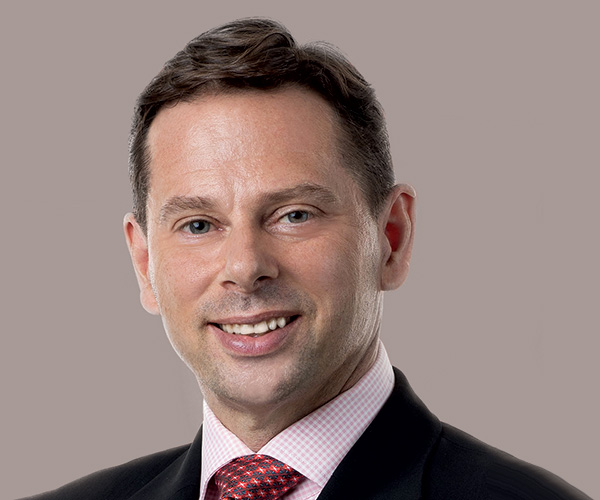
Pierre DeGagné
Head of Fund Selection, DBS Private Bank
WHAT DOES HIGH CONVICTION MEAN TO YOU?
Conviction has a very special meaning to us – after all, our fund selection system is
conviction-based!
We are a team of five analysts and we review almost 300 funds, judging our levels of conviction as to whether these funds are going to outperform the benchmarks over a 12- to 18-month period.
Expected alpha is commensurate to conviction levels. The analysts can make a lot of money if their highconviction view is right, or lose a lot if it’s wrong. Out of our universe of funds, only about 40% are positively rated, which is when the analyst has conviction that these funds are going to outperform.
So we’re highly selective in the funds that we think are going to add value, which creates a very accountable type of selection process.
PUTTING IT INTO PRACTICE
We measure things, and I think that makes a difference. We judge our convictions on the basis of the odds of a fund outperforming, and we group funds into forecast
conviction groups. For example, we have one group of funds that the analysts think is 80% likely to outperform, and others going all the way down to 55% or 52%. Then we measure the results, and I expect that 80% of the analysts’ calls are right. In a way, we’re taking the classic consultant research and qualitative base and combining it with statistical modelling and control for behavioural errors.
MAINTAINING YOUR STANCE
We like managers who have been in the business for a long time, have very good teams behind them, understand and have seen difficult markets and successfully adjusted when the markets changed in ways they weren’t expecting.
Ultimately, their style doesn’t matter so much to us. What I need is for my bullish manager to do well in a bullish market, for my bearish manager to do very well in a bearish market, and when both are in difficult markets for themselves, that they are adjusting as much as they can without giving up their style and the integrity of their processes.
WHY IT MAKES SENSE NOW
We have gone from a world where there was going to be three rate hikes, to one where there will potentially be none this year, and this was just announced very recently.
People had to adjust to a new world paradigm, and the managers have had to adjust how they’re thinking about it – and that’s difficult. But ultimately, a good manager is one who can manage these changes. That’s really where a lot of their skills lie, in the capacity to adjust to market changes and execute.
HOW TO BALANCE WITH PASSIVE
Fundamentally, we are a group that believes active management can add significant value to our clients’ portfolios. I’m personally very cautious about passive investing. It could make sense for those who want the cheapest possible route, or for a platform that doesn’t have a lot of research capacity or the right tools – but I think investors have to be cautious. Particularly in fixed income, there are many ETFs that are very large, and ETFs that are not replicating the way an equity ETF would do, so investors really must keep their eyes open to what those risks are.
TOP OF THE CHECKLIST
When you’re talking to a lot of managers, knowing their history and the development of the industry is key. It’s also important to know if they were involved in developing the strategy, which shows a personal stake. It doesn’t have to be just an actual
investment in the fund – it can also be the pride and connection forged from being the innovator. We do like to see these histories and how everything has come together organically, as opposed to being hired in to manage an asset given to them.
WHAT IS YOUR CONVICTION FOR THE YEAR AHEAD?
We think it’s going to be a volatile year. It’s not going to be a trending year, so we believe there are two strategies that investors should look to. Firstly, buy core assets and, if uncertain about them, dollar cost into those positions. Alternatively, buy widely diversified global assets and let the manager dollar cost for you. The second strategy plays on volatility. The market will drop at certain points in time since it’ll be a volatile year, so be prepared to buy great assets that go on sale when it does.

Laurent Lequeu
Head of Portfolio Management, Lumen Capital Investors
WHAT DOES HIGH CONVICTION MEAN TO YOU?
At Lumen Capital Investors, we believe that high conviction investing remains an important feature for generating performance over the long-term.
More than elsewhere, bond picking is part of the art of high conviction investing, as it is likely to deliver the alpha that every client is looking to generate in the current low yield environment.
While the high conviction investing strategy is relatively mainstream in the world of equities, it is still less commonplace in the world of fixed income, although more credit managers are now embracing this philosophy.
PUTTING IT INTO PRACTICE
High conviction and diversification can co-exist in a portfolio if the high conviction process is controlled by some risk management tools. As an asset allocator, we think that investing in various high conviction funds will help our clients to get enough diversification among various investment themes.
In addition, credit markets are potential good hunting grounds for active managers, but the risks are also higher given that fixed income markets could be less liquid than equity markets.
Therefore, high conviction investors in the fixed income space need to have better risk management tools in place to ensure that the risks they take for their investors are not disproportionally elevated.
MAINTAINING YOUR STANCE
We continuously screen active fund managers and are happy to invest in funds managed by small, boutique and niche asset managers, as we think that they are most likely to deliver outperformance over the medium term. Small, boutique and niche asset managers are also usually more focused on a particular investment theme, which gives them a competitive advantage versus the global asset managers.
WHY IT MAKES SENSE NOW
High conviction investing is particularly important in a world where passive investments have taken a major part of clients’ portfolios and where investment portfolios have been highly standardised.
In addition, we are of the view that high conviction managers are most likely to deliver value for money for their investors, as their primary focus is generating alpha for them. While it could be difficult for a benchmarked fund to justify its management fees, high conviction fund managers’ management fees are more likely to be legitimate because they are looking to generate extra performance.
WHAT IS YOUR CONVICTION FOR THE YEAR AHEAD?
With rising volatility and increasing investment opportunities arising in new
asset classes, we think we could see a lot of investors being disappointed by ETF investments and turning back to high conviction fund managers who are able to derive benefits from market discrepancies.
The Chapters
With index huggers coming under greater scrutiny, investors are proving more willing to pay up for alpha. But should they expect to take on more risk as result? Fund managers and investors debate the merits of a high conviction approach in the current environment
The information trail remains daunting for asset managers. Company reports and announcements are one option, providing insights into more than 100,000 firms globally. Then there are tens of thousands of funds and ETFs to track, macroeconomic indicators to parse and political risks to monitor.
The dos & don’ts of gearing up for a recession
Whether you’re convinced that a recession is imminent or you’re more sanguine about the economy, it pays to be be prepared for a downturn, particularly since no one can have perfect foresight. Here are the dos and don’ts of gearing up for a potential recession
Gaining access to the right data has become an important part of fulfilling your fiduciary duty. How can fund managers reach clear conclusions and avoid the pitfalls of the echo chamber?