
Recession or dip? How to prepare portfolios with conviction
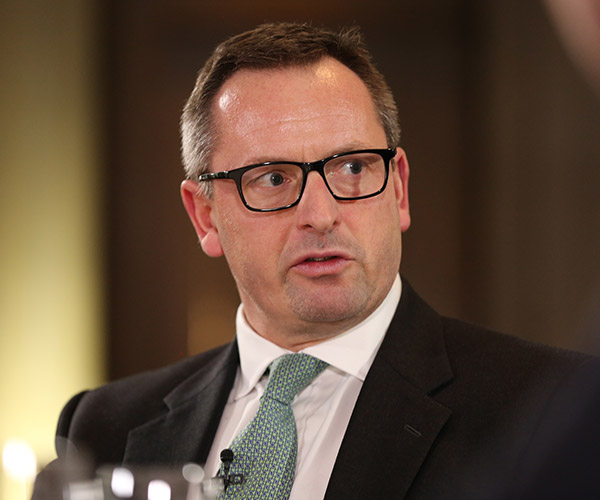
‘Even if the cycle goes on longer and we earn a bit less, we’re taking less risk, so that’s our approach’
– Ulrich Voss
These are challenging times for global markets. On the back of a more volatile economic environment around the world, opinions are divided as to
whether we’re heading for a recession or simply enduring a late-cycle slowdown.
One of the problems is that markets have had a relatively clear run since the financial crisis, with accommodative monetary policy and excellent visibility, said Matthew Benkendorf, chief investment officer of Vontobel Asset Management’s Quality Growth Boutique.
‘I think it is currently a difficult environment and there is no easy way for people to jump on and ride it until it dissipates,’ he said. ‘With all the crosscurrents going on right now, I think investing requires a particular focus.’
The coming months, he argued, will be difficult. ‘To be clear, difficult doesn’t mean down,’ he added. ‘It just means you need smart people and a clear roadmap of how you’re going to get to where you want. You can’t just be along for the ride.’
Benkendorf suggested that the most straightforward way to look at the issue is accepting that a recession is as inevitable as death and taxes. The bigger question, he said, is how to react to the reality of not being able to predict when that recession will strike, how long it will last or how bad it will be.
While he believes that it is good that investors are alert and feeling some trepidation and concern, he also noted that heightened anxiety about a recession will provide additional opportunities.
‘People exaggerate the pain of recessions,’ he said. ‘Look back over the past 100 years at the number of recessions. They’re in the single digits and they’re typically not that long and not that painful. They’re great opportunities.’
He argued that a portfolio that had bought into every major historical dip, even during the Great Depression, would have done well. ‘Everybody’s really panicked and concerned over this next recession, like it’s going to be the end of the world,’ he said. ‘Actually, it’s going to be awesome.
‘I hope they sell their assets, because it could be great to invest at discounted valuations,’ he added.
NOT ALL BAD NEWS
Peter McLean, who focuses on manager research across various asset classes at Stonehage Fleming, agreed that economic indicators are not necessarily telling a negative story.
‘There remains very little evidence that we are on the brink of a recession,’ he said. ‘It’s true that growth is slowing, but it’s not collapsing and a lot of the headwinds facing markets last year, which caused so much volatility, appear to be abating.’
He highlighted that central banks appear to be listening to the markets. ‘The Federal Reserve has paused its tightening cycle, at least for the time being, and that has been received favourably by the market so far,’ he said.
What’s more, certain sectors look more positive than they once did. ‘Many disruptive technology companies that were trading on extremely high multiples have de-rated quite considerably,’ he said. ‘For long-term investors, the recent volatility offers interesting opportunities in this space.’
Alberto García-Cabo Fernández, who is in charge of equity fund selection in the analysis department of Inversis Gestión, agreed. ‘December was a great opportunity to build new positions in US equities, and we are now slightly overweighting the credit area too,’ he explained.
Even so, he is neutral on equities because the main issue is growth. ‘It’s difficult to know if we are going to see a recession or not, so we just keep in mind that we are here to invest in the long run,’ he said.
GETTING MORE CONSERVATIVE
According to Ulrich Voss, who leads the capital markets unit at Tresono Family Office, it is impossible to predict whether we are at the end of the cycle or just experiencing a mid-cycle dip.
‘In general, what we do for our clients is to shorten duration. We also look at quality in both fixed income and equities,’ he explained. ‘What we don’t want to have is highly leveraged companies.’
He predicted that identifying the right quality names will be crucial. ‘2019 might be the year of the balance sheet,’ he said.
‘We are being more conservative, dancing closer to the door,’ he added. ‘Even if the cycle goes on longer and we earn a bit less, we’re taking less risk, so that’s our approach.’
Ziad Abou Gergi, who is part of the multi-management team at Barclays Investment Solutions, argued that even if this does turn out to be the start of a recession, it doesn’t automatically mean that a full-blown crisis is on the way.
‘It’s interesting that when everybody is talking about the same risk,’ he said. ‘Usually, that means investors are positioned in a way that if a recession materialises, it won’t hurt that much because they have already identified the risk. What hurts is what you don’t expect.’
He claimed that some US managers he has met increased their high conviction equity allocations during the sell-off and actually bought some technology names that they had previously dismissed on valuation grounds. ‘If you have a time horizon that goes beyond a few months or a year, it became a good opportunity to capture,’ he explained.
STEADY APPROACH
It’s also a question of investment horizons for Andrew Harradine, who is responsible for fund selection at EFG Asset Management. Indeed, if you’re trying to predict what will happen over the next three to six months, then that will be incredibly difficult in the current environment, he said. However, looking over two to three years, the prospects are brighter because earnings drive the markets.
‘If you’re invested in the right sort of companies that can deliver earnings over the long term, then hopefully you’re in a position to make money for clients over the medium term,’ he said.
‘To a large extent, it’s about staying the course and sticking to your investment approach, but on a week-to-week basis it’s clearly a very difficult period to navigate.’
Mark Holman, chief executive officer of TwentyFour Asset Management, said that he believes the main issue for bond investors is how to manage credit quality as downgrades begin to outnumber upgrades. ‘I still think the default rate will remain low in 2019, but I do think we’re going to see more credit surprises this year than we did in 2018,’ he said. ‘Our strategy is to be very selective by sector – and very selective in taking longer-dated risk.’
He insisted that this should be in companies where there is high conviction that the credit story is not deteriorating. ‘My strategy for markets now is to keep everything really short and to keep credit quality really high,’ he added.
The Chapters
With index huggers coming under greater scrutiny, investors are proving more willing to pay up for alpha. But should they expect to take on more risk as result? Fund managers and investors debate the merits of a high conviction approach in the current environment
The information trail remains daunting for asset managers. Company reports and announcements are one option, providing insights into more than 100,000 firms globally. Then there are tens of thousands of funds and ETFs to track, macroeconomic indicators to parse and political risks to monitor.
The dos & don’ts of gearing up for a recession
Whether you’re convinced that a recession is imminent or you’re more sanguine about the economy, it pays to be be prepared for a downturn, particularly since no one can have perfect foresight. Here are the dos and don’ts of gearing up for a potential recession
Gaining access to the right data has become an important part of fulfilling your fiduciary duty. How can fund managers reach clear conclusions and avoid the pitfalls of the echo chamber?